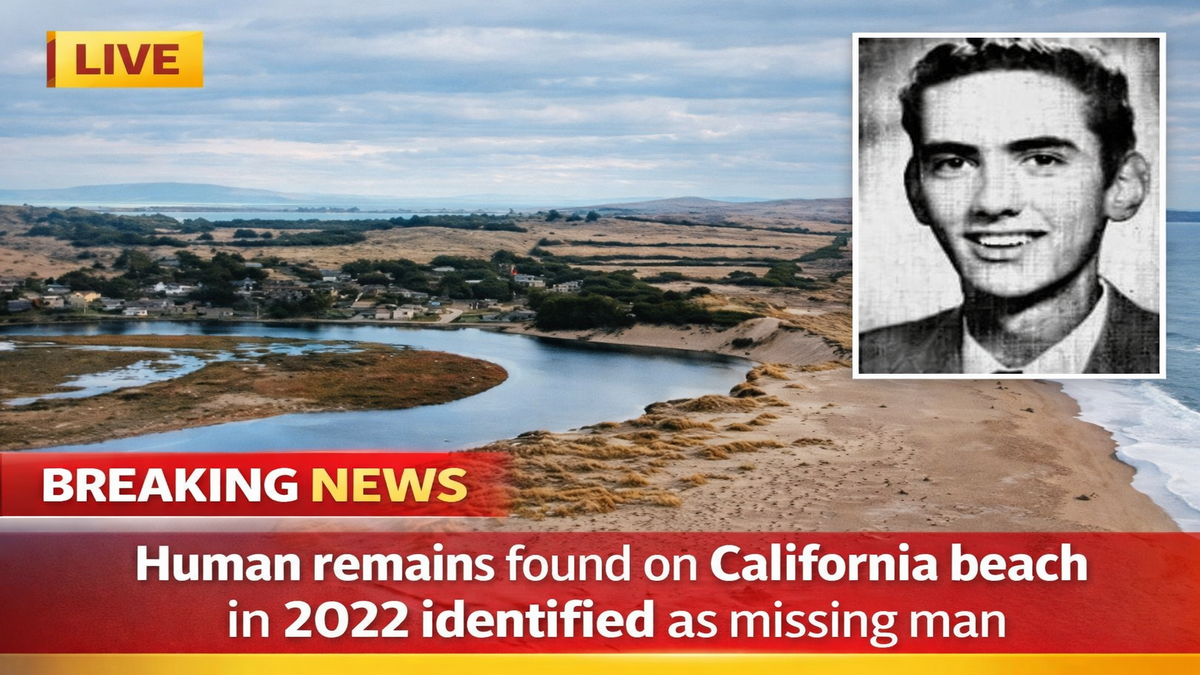
In a stunning example of cutting-edge forensic science meeting persistent investigation, human remains unearthed on a quiet California beach in 2022 have been positively identified as those of a man missing for more than two decades. Discovered at Salmon Creek State Beach, the bones belong to Walter Karl Kinney, a former Santa Rosa banker who vanished in 1999. This resolution, powered by the DNA Doe Project, highlights how investigative genetic genealogy is transforming the resolution of long-standing cold cases.
The Unexpected Find on Salmon Creek State Beach
During a routine family outing in the summer of 2022, beachgoers searching for seashells made a chilling discovery partially buried in the sand. The item was a human bone, specifically a tibia, embedded with distinctive surgical hardware that hinted at a personal medical history.
Local authorities from the Sonoma County Sheriff’s Office were alerted immediately. Despite thorough searches, no additional remains appeared nearby, complicating the initial assessment amid the beach’s dynamic coastal environment.
Why Coastal Discoveries Pose Unique Challenges
Ocean tides, sand erosion, and wildlife activity often scatter or degrade evidence along California’s rugged shoreline. This case exemplified those hurdles, turning a simple find into a multifaceted mystery.
- Key evidence: A single bone with surgical implants for identification potential.
- Environmental factors: Saltwater exposure risking DNA degradation.
- Immediate action: Secure the site and transport for forensic analysis.
Overcoming Early Investigative Roadblocks
Pathologists quickly verified the bone’s human origin, but standard missing persons databases yielded no matches. The remains were classified as a potential John Doe, a common fate for unidentified coastal finds lacking immediate clues.
With traditional methods stalling, the Sonoma County Sheriff’s Office sought external expertise. They partnered with the nonprofit DNA Doe Project (DDP), renowned for its pro bono work on intractable cases using innovative techniques.
Extracting viable DNA from the weathered fragment proved tricky but feasible. The team generated a comprehensive profile, setting the stage for genealogical breakthroughs.
Harnessing Genetic Genealogy for a Breakthrough
In early 2026, the DDP uploaded the DNA profile to GEDmatch, a popular public database for ancestry enthusiasts. Distant relative matches soon emerged, allowing researchers to construct a sprawling family tree spanning multiple states.
These genetic leads pointed westward, converging on Santa Rosa, California—a location mere miles from the discovery site. The proximity fueled speculation about Kinney’s final movements near the coast.
Tracing the Path from DNA to Identity
Genealogists meticulously pieced together public records, migration histories, and obituaries. This process narrowed suspects until Walter Karl Kinney emerged as the prime candidate.
- Genetic matches: Third- and fourth-cousin connections.
- Record cross-checks: Birth records from 1940 in San Diego.
- Geographic ties: Longtime resident of nearby Santa Rosa.
Unraveling the Mystery of Kinney’s Disappearance
Born in 1940, Walter Karl Kinney had built a stable life as a banker in Santa Rosa before disappearing on August 10, 1999, at age 59. Family described him as intelligent yet sensitive, overwhelmed by life’s pressures.
A pivotal clue surfaced from historical archives: partial remains found in 1999 at nearby Bodega Bay. A woman had claimed them as her father’s in 2003, with X-rays matching surgical hardware—now linking directly to the 2022 tibia.
This “double Doe” scenario—unidentified twice over 23 years—was deemed highly unusual by DDP leader Traci Onders. Ocean currents likely fragmented and redistributed the remains across Sonoma County beaches.
The Power of Investigative Genetic Genealogy Explained
Investigative genetic genealogy (IGG) merges DNA sequencing with traditional genealogy. It leverages consumer databases like GEDmatch to identify relatives, bypassing limitations of law enforcement-only systems.
Unlike CODIS matches requiring close kin, IGG thrives on distant cousins. This democratizes cold case solving, empowering nonprofits to aid underfunded agencies.
In Kinney’s resolution, IGG integrated 1999 evidence with fresh 2022 data. The swift closure—in under two weeks—demonstrates its efficiency.
Step-by-Step IGG Process in Action
- DNA extraction: From degraded bone samples.
- Profile upload: To genealogy platforms.
- Tree building: Hypothesizing ancestors from matches.
- Verification: Family confirmations and medical records.
A Glimpse into Walter Karl Kinney’s World
Kinney’s daughter remembered him fondly as “smart and sensitive,” suggesting personal struggles may have drawn him to the sea. His banking career provided stability, yet he relocated from San Diego to Santa Rosa, seeking perhaps a quieter life.
While the precise cause of death remains under forensic review, identification offers closure. The Sonoma County Sheriff’s Office praised the DDP partnership, vowing continued collaboration.
Broader Lessons for Cold Case Investigations
California’s West Coast beaches frequently deliver such poignant reminders of the past. Relentless waves displace remains, challenging recovery efforts.
The DDP has resolved over 200 cases since 2017, from homicides to disappearances. Their model encourages more agencies to embrace IGG, filling resource gaps.
As technology advances, expect rising identifications. Yet, success hinges on human elements: vigilant citizens, dedicated detectives, and volunteer genealogists.
Kinney’s story transcends one man, spotlighting persistent unknowns along America’s shores. It underscores that even fragmented evidence can yield profound truths.
Conclusion: A Testament to Persistence and Innovation
The identification of Walter Karl Kinney at Salmon Creek State Beach celebrates the synergy of science and determination. From a casual beach walk to genetic mastery, this case closes a 27-year enigma, healing wounds for a grieving family.
As investigative genetic genealogy gains traction, it promises hope for thousands more. Sonoma County’s ongoing work reminds us: every unnamed soul deserves a story reclaimed from the sands of time.